

Introduction
The apparel industry operates on scale, where a factory produces bulk quantities of garments for a specific style or design at a time. However, before a single piece of fabric is cut or stitched, an extensive sequence of preparation must take place. This preparatory phase of apparel manufacturing is known as pre-production.
Once pre-production is complete, the physical manufacturing moves onto the production functions, which transform raw fabrics into wearable garments ready for retail shelves. This guide explores the end-to-end journey of a garment, breaking down both pre-production planning and production floor workflows into clear, plain language.
Phase 1: The Pre-Production Stage
Before the factory floor hums with sewing machines, a tremendous amount of administrative, technical, and creative work happens behind the scenes. Pre-production acts as the structural blueprint for the entire order. It bridges the gap between a buyer’s creative vision and the factory’s physical execution.
1. Sampling (Product Development)
Sampling is the process where a factory develops garment samples according to a buyer’s specified design. This stage is also frequently referred to as the product development stage. Samples are strictly required at various sequential stages to secure official approval from the buyer on a particular design. Depending on where the order is in the development pipeline, these samples go by specific names:
- Proto sample: Created at the very beginning to test if the basic design concept works.
- Fit sample: Used to check how well the garment fits on a live model or a form.
- Size set sample: Produced across all ordered sizes (e.g., S, M, L, XL) to ensure grading accuracy.
- Salesman sample: Used by the buyer’s marketing or sales team to showcase the upcoming line to retailers.
- Production sample: Represents what the final mass-produced goods will look like.
- Top of production (TOP) sample: Pulled directly from the initial bulk production run for final sign-off.
- Shipment sample: Taken from the packed goods right before it leaves the factory to verify final quality.
2. Garment Costing
Business is fundamentally about making a profit, making correct product costing before order finalization a critical step. The cost of a garment is the cumulative total of raw materials, direct labor, and direct and indirect overheads.
Once a sample is developed—or directly after receiving a buyer’s sample—the factory must calculate and send the FOB (Freight on Board) price of the garment. To determine this, the factory creates a cost sheet accounting for:
- Raw material costs
- The total direct labor costs of each production process
- Factory overhead expenses
Ultimately, an FOB price is the sum of the base garment cost, the factory’s profit margin, and applicable taxes.
3. Production Planning
Once the order is officially confirmed, the factory plans for raw material requirements. This includes procuring fabrics, sewing threads, packaging materials, hang tags, and various trims and accessories.
During this stage, the factory also maps out a strict timeline. Key milestones include:
- When to start fabric cutting
- When to submit pre-production samples
- When to finish sewing and finishing lines
- The target date for final quality inspection
- The final shipment date
Additionally, the production planning stage defines clear job responsibilities for the different processes involved.
Phase 2: The Production Functions
With planning completed and materials secured, the physical creation of the garment begins on the factory floor.
1. Cutting
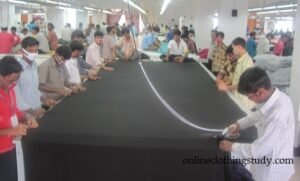
The manufacturing journey on the floor starts with cutting. In this stage, fabrics are layered on a large cutting table layer by layer up to a certain height. Using a cutting machine, the fabric layers are cut into specific garment shapes or patterns and separated from the spread.
Fabric layering can be done through either manual spreading or automated spreading. Once cut, the individual parts are numbered, bundled together, and sent downstream to the sewing room.
Cutting holds immense importance for two major reasons:
- The quality of the final garment heavily depends on high-precision cutting quality.
- Fabric represents about 70% of the total garment cost. Meticulous cutting is vital for effective fabric saving and waste reduction.
2. Sewing or Stitching
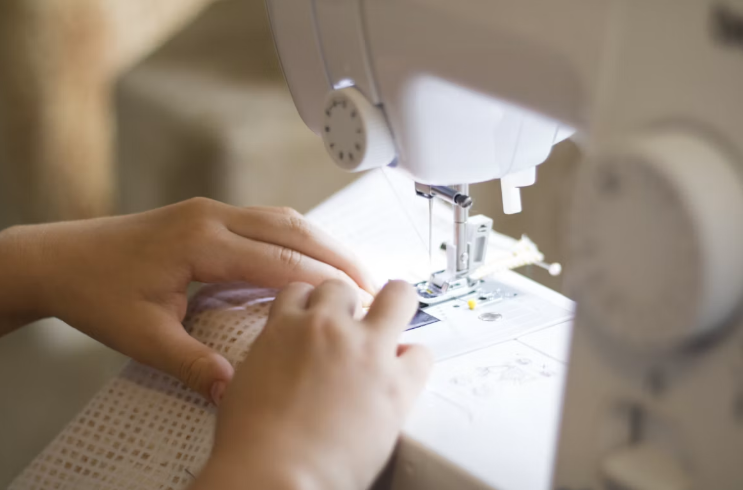
In the sewing room, individual garment panels are stitched together using industrial sewing machines. This is the stage where flat 2D fabric patterns are converted into 3D forms. An operator runs the machine, using sewing threads to join garment parts together.
Factories select specific machines based on the required seams and stitches. Traditionally, sewing machines in the industry are laid out in a straight line:
- Cut parts are fed at the very start of the line.
- The pieces pass sequentially from operator to operator down the line.
- At the end of the line, a complete, assembled garment emerges.
Each machine is run by an individual operator who typically sews only one or two specific operations on the garment. A standard line consists of sewing operators, helpers who feed them cut parts, threads, and trims, a quality checker, and a fully or partially dedicated supervisor.
3. Thread Trimming
After stitching, all hanging threads are manually cut using hand trimmers, though automated thread trimming machines are also available to perform this task. All loose threads inside and outside the garment are thoroughly removed. Delivering garments completely free of loose threads and long tails is a foundational quality requirement.
4. Washing
This process is performed specifically when a buyer requests a specialized wash or unique chemical finishes for their garments. For light-colored garments, a light wash is sometimes carried out simply to remove accumulated factory dirt and stains, even if a heavily washed look wasn’t originally requested in the order.
5. Finishing
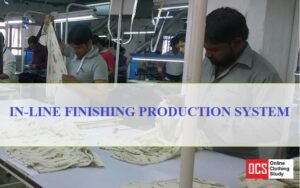
The next step of apparel manufacturing is finishing processes. The finishing stage prepares the garment for packaging and retail display. It generally includes:
- Garment and Measurement Checking: After sewing, quality checkers inspect every piece to ensure it matches the buyer’s strict quality standards. This includes checking visual appearance and precise measurements.
- Spotting: Spotting is required to remove accidental stains on the pieces. Various chemical solvents are used to safely remove oil stains, marks, and stubborn spots.
- Ironing: Each garment is pressed with an iron or steam press to remove all wrinkles and creases.
6. Packing and Folding
Once pressed, each garment is neatly folded, often with an internal tissue or cardboard support. Folding styles vary widely from product to product and buyer to buyer.
Hang tags, special marketing tags, and price stickers are then attached using plastic fasteners (Kimble tags) or threads. Folded and tagged garments are placed into individual polybags. Throughout this process, garments are randomly checked by internal quality controllers to guarantee that only flawless goods are packed.
7. Value-Added Processes
In current fashion trends, very few garments are made completely plain. Many undergo value-added processes between sewing and finishing, such as:
- Printing
- Garment dyeing
- Special washing techniques
- Embroidery
- Adda work (intricate hand embroidery featuring beadwork)
8. Final Inspection and Dispatch
Once the garments are fully packed (a milestone also referred to as shipment readiness), they undergo a mandatory quality inspection before final dispatch. This is typically carried out by the buyer’s Quality Assurance (QA) department, though factories frequently hire independent third-party quality auditors for the task.
If the packed goods successfully meet all of the buyer’s quality standards, the shipment is officially accepted. The factory then dispatches the goods to the buyer, completing the complex cycle of apparel manufacturing.

I have posted another article ‘Garment Manufacturing Process from Fabric to Finished Product‘ which shows more details about the process of garment manufacturing. You can also refer to the following book to learn the complete process of garment manufacturing.



Leave a Reply