

India’s textile sector, a powerhouse accounting for 2.3% of GDP, 12% of exports, and the second-largest employer after agriculture (engaging over 45 million people), is undergoing a massive transformation with the implementation of the new Labour Codes.
These reforms simplify compliance for the largely MSME-driven industry while significantly strengthening worker welfare, aiming for a more resilient, competitive, and ethical manufacturing base.
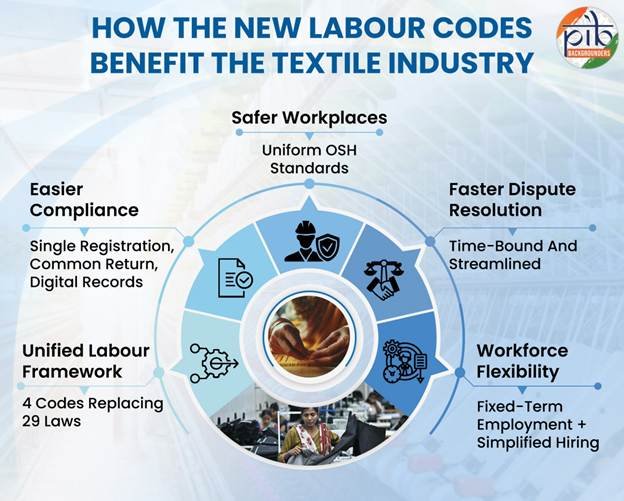 |
| Image source: https://www.pib.gov.in/ |
Here are the key takeaways from the reform package for both employers and workers in the textile supply chain:
For Employers: Simplified Compliance & Enhanced Competitiveness
The new Codes replace 29 complex, overlapping laws with just four unified Codes, focusing on creating a smoother business environment:
| Benefit | How It Helps Textile Employers |
|---|---|
| Streamlined Laws | Consolidates 29 laws into 4 Codes, eliminating duplication and simplifying administrative confusion, especially for clusters operating across state lines. |
| “Ease of Doing Business” | Introduces a single registration, common return filing, and five-year all-India licenses with time-bound, deemed approvals, drastically cutting bureaucracy and delays. |
| Higher Thresholds | Raises the limit for Standing Orders applicability from 100 to 300 workers, easing the compliance burden on numerous small and medium-sized textile units. |
| Flexible Workforce | Permits Fixed-Term Employment (FTE) with equal benefits, allowing factories to quickly adjust workforce strength during seasonal export peaks without reliance on contract labor. |
| Reduced Risk | Decriminalizes procedural offenses, favoring monetary penalties and a 30-day compliance window over imprisonment, which shifts enforcement from punitive to facilitative. |
| Objective Inspection | Replaces traditional inspectors with “Inspector-cum-Facilitators” and implements technology-based, randomized inspections, promoting transparency and reducing harassment. |
For Workers: Stronger Protection & Enhanced Welfare
| Protection | How It Benefits Textile Workers |
|---|---|
| Universal Minimum Wage | Extends minimum wage entitlement to all textile workers, including those in unorganized and non-scheduled employment, ensuring fair pay across all processes. |
| Overtime Pay | Mandates payment at double the ordinary rate for overtime work, providing fair compensation, especially in high-demand export units. |
| Social Security | Provides Pan-India ESIC coverage (medical, disability, maternity benefits) and expands the definition of “family” for female workers to include parents-in-law. |
| Job Formalization | Mandates appointment letters for all workers, enhancing job security, legal recognition, and access to social benefits for temporary or piece-rate employees. |
| Women Worker Safety | Implements mandatory safety standards, transportation, and lighting for women working night shifts in 24×7 export units, promoting gender equity and opening new opportunities. |
| Paid Leave | Reduces the eligibility threshold for paid annual leave from 240 to 180 working days, ensuring seasonal or contract workers can also qualify for rest and recreation. |
In conclusion, these Labour Codes are foundational to the vision of Viksit Bharat 2047, helping the textile sector achieve global competitiveness while ensuring growth is sustainable and inclusive for all 45 million workers who drive this vital industry.
Read the full news here: https://www.pib.gov.in/FactsheetDetails.aspx?id=150508&NoteId=150508&ModuleId=16®=3&lang=1
News source: GOI, Press Information Bureau











Leave a Reply